Free guide · A field guide to Filipino behavior
You can find a hundred lists of Filipino values online. They all say roughly the same thing, and none of them prepare you for the thing that happens in your first month here. The lists tell you what Filipinos do. They do not tell you why. This guide starts with the one idea everything else is built on, then works outward.
 Free
FreeA field guide to Filipino behavior
The values driving daily life here, and the one idea underneath all of them.
The moment
A contractor agrees to a deadline he has no intention of meeting.
A neighbor you barely know invites you to a funeral.
Your partner goes cold for two days over a comment you do not even remember making.
And you are left standing there with the only question that matters. Why did that just happen? The lists cannot answer it. They describe behavior without explaining the logic underneath.
The center
Shared identity. The plain version: the person in front of you is not fully separate from you. Wherever you grew up, you were probably taught to draw a hard line between self and other. The Filipino default draws that line lightly.
Your dignity and mine are connected. If I embarrass you, I have embarrassed myself too.
You can watch it work
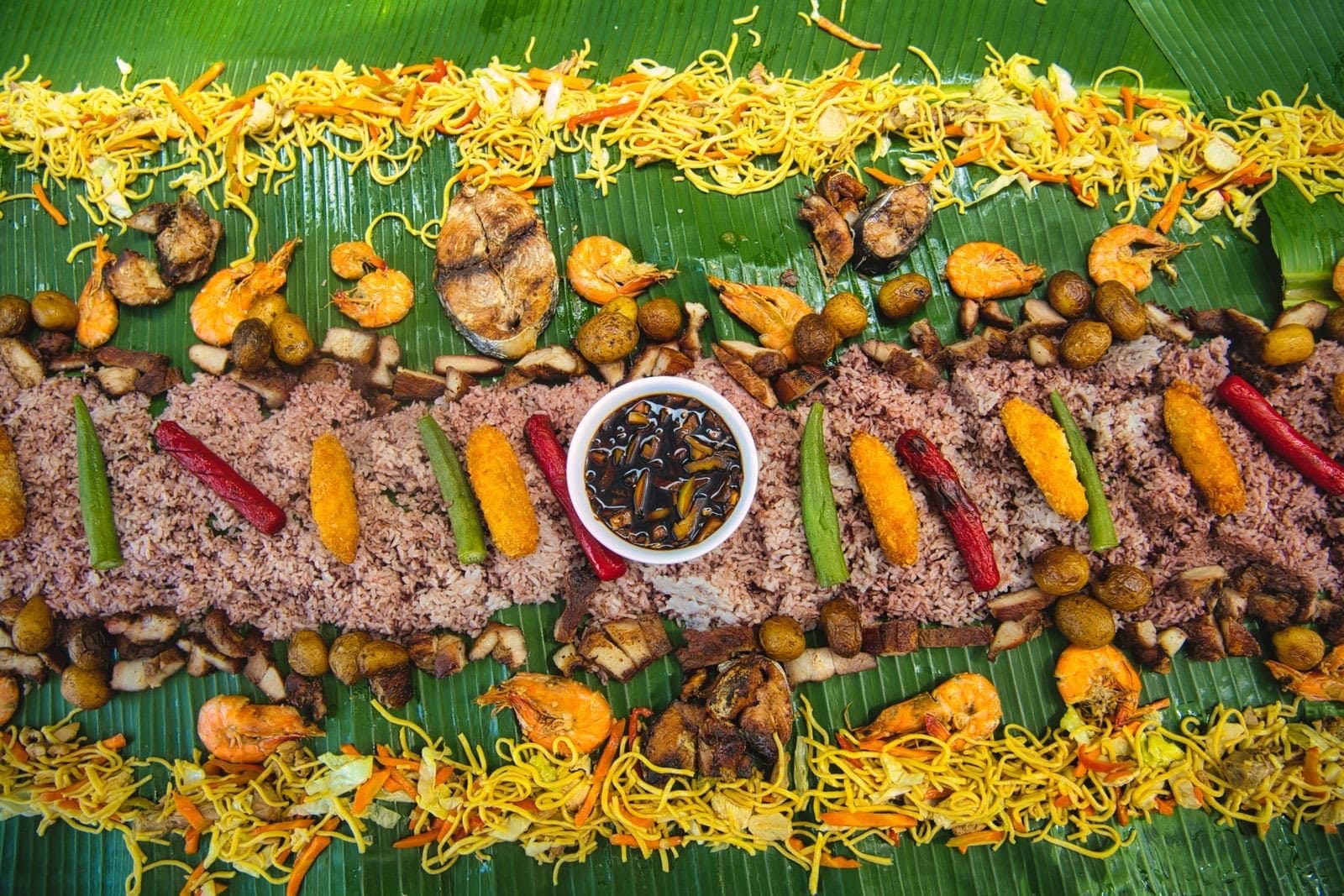
Anyone eating in front of other people says kain tayo, let us eat, to strangers, security guards, the delivery rider at the door. Nobody expects you to actually sit down.
The invitation exists because eating in front of a person without acknowledging them treats them as not there, and treating a person as not there is close to the worst thing you can do.
Get that order right, and the rest of the guide is just detail. The values are not the core. They are the different ways people protect it.
What is inside
Each one gets the same treatment: what it looks like in real life, the mistake foreigners make, and how it connects back to the center.
Usually translated as shame. Closer to a sensitivity to how your actions land on other people, and an instinct to avoid any moment where someone is embarrassed, including you.
Getting along with the group, and the willingness to give up what you want so the group stays together. When the whole room nods, you have harmony, not necessarily commitment.
A debt of the inside. The obligation created when someone helps you in a way you did not earn and cannot fully repay. The debt is not a problem to solve. The thread is the point.
Knowing what is appropriate for your position, and removing yourself from a situation before anyone has to ask you to. It runs on hints, which is exactly why foreigners miss it.
Personal dignity, and the sensitivity that protects it. Correct someone in public and the answer usually is not an argument. It is distance, or a resignation letter.
People working together for the good of the group. It goes both ways. The neighbors who help you expect to be helped, and the foreigner who never arrives with his own shovel gets remembered.
Age carries authority, and the language carries the respect. Nobody expects your po to be grammatical. But learn who the oldest person in the room is, and greet them first.
The reframe that makes it usable
The contractor who agreed to an impossible deadline was protecting the meeting. The employee who went silent was protecting your standing in front of the team, and her own. The family that will not accept repayment is protecting the tie between you.
You were trained to protect the truth of the moment. Filipinos are trained to protect the relationship around the moment. Neither is wrong. But you are the one who moved, so you are the one who needs to learn to translate.
Where this comes from
The framework comes from Virgilio Enriquez, the Filipino psychologist who founded the field of Sikolohiyang Pilipino in the 1970s. The project was to study Filipinos from the inside, in their own language and on their own terms, instead of measuring them against frameworks built for Americans.
Earlier research listed behaviors like hiya and pakikisama and treated them as the core of the culture. Enriquez argued they had it backwards. Those are surface behaviors. The core is kapwa.
Before you use this
This is a model, not a law. The Philippines has more than a hundred ethnolinguistic groups, and a value that is strong in a North Cotabato farming town looks different in a BGC office tower or a Cebuano household. Younger, urban Filipinos negotiate these values rather than simply inheriting them. Understand the core, and remember that these values are not held the same way everywhere.
Get the guide free in your inbox. Then ask the question the next time something confuses you, and watch how much of daily life here stops being a mystery.
When it stops being theory
That is two people running on different systems, and it is what Crossbuilt is built for.
Get the free California Expat guide and stay connected.